Just as a disclaimer... I highly recommend for other coaches to NOT use this exercise. This is some risk involved. If you hit their eyes, you could be in huge trouble.

Many of my students don't bend their knees. Many of them bend their knees at the start of the point, then begin to stand up or bounce too much during the long rallies. I have been threatening them for years that I would add an adjustable drop-ceiling to my tt room. Ok, I finally did it. Now, if they stand up, they are reminded by the drop ceiling.
In table tennis training, there are times when multiball training is absolutely necessary and there are times when it is over-used. In this short article, I’m going to give you some advice on when to use it or when not use it.
Simplifying for Beginners
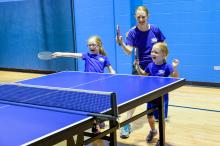
For complete beginners who have never played before, sometimes using a robot or multiball is easier because it allows more time between balls. As soon as the beginner is able to make contact with the ball, I highly recommending transitioning to single ball instead of multi-ball.
2 Peter 3:9 The Lord is not slack concerning His promise, as some count slakness, but is longsuffering toward us, not willing that any should perish but that all should come to repentance.
Typically, playing about 60-65% forehand and about 35-40% backhand will allow you to cover the table best. However, for some of my students, I give some flexibility as each player/style/age/conditioning/body type is unique. Because the forehand zone is larger, most players practice forehand footwork or full-table footwork. I have rarely seen players practicing backhand footwork.
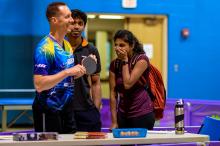
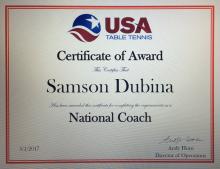
Today, USATT gave me my certification as a National Coach.
Moving forward, what are my goals?
1. Perspective
Keep everything in perspective, giving God the glory for it all in word and deed. Colossians 3:17 says… And whatever you do in word or deed, do all in the name of the Lord Jesus, giving thanks to God the Father through Him.